HLA-DR3
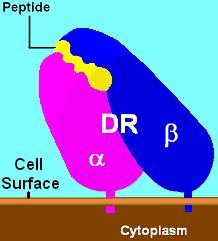
title: "HLA-DR3" type: doc version: 1 created: 2026-02-28 author: "Wikipedia contributors" status: active scope: public tags: ["hla-dr-haplotypes"] topic_path: "general/hla-dr-haplotypes" source: "https://en.wikipedia.org/wiki/HLA-DR3" license: "CC BY-SA 4.0" wikipedia_page_id: 0 wikipedia_revision_id: 0
HLA-DR3 is composed of the HLA-DR17 and HLA-DR18 split 'antigens' serotypes. DR3 is a component gene-allele of the AH8.1 haplotype in Northern and Western Europeans. Genes between B8 and DR3 on this haplotype are frequently associated with autoimmune disease. Type 1 diabetes mellitus is associated with HLA-DR3 or HLA-DR4. Nearly half the US population has either DR3 or DR4 (only 1–3% have both), yet only a small percentage (about 0.5%) of these individuals will develop type 1 diabetes.
Serology
Some DR3 also react with HLA-DR17 and/or HLA-DR18. The DRB1*03:04 primarily reacts with DR3. The serotypes of *03:05, *03:06, *03:08 to *03:31 are unknown.
Disease associations
By serotype
HLA-DR3 is associated with early-age onset myasthenia gravis, Hashimoto's thyroiditis (along with DR5), primary sclerosing cholangitis, and opportunistic infections in AIDS, but lowered risk for cancers. It is also associated with membranous glomerulonephritis
By allele
DRB1*03:01 (see HLA-DR17)
DRB1*03:02 (See HLA-DR18)
DRB1*03:04 is associated with Graves disease
By haplotypes
DR3 and/or DQ2 is associated with Moreen's ulceration, "bout onset" multiple sclerosis, Graves' disease and systemic lupus erythematosus
DR3-DQ2 linkage is associated with coeliac disease, dermatitis herpetiformis, Diabetes mellitus type 1. DR3-DQ2 is the serological marker for HLA-DQ2.5cis isoform. Although it cannot identify the alpha ".5" chain of HLA DQ, DQA105:01 gene is almost always found within the DR3-DQ2 haplotype Eurasia (however in older studies DQA105:05 is commonly confused with DQA1*05:01)
Genetic linkage
DR3 is genetically linked to HLA-DR52, DRB3*02:02 allele, and HLA-DQ2 (DQ2.5).
References
References
- [http://www.ebi.ac.uk/imgt/hla/allele.html derived from IMGT/HLA]
- Wiencke K. (2007). "Primary sclerosing cholangitis is associated with extended HLA-DR3 and HLA-DR6 haplotypes". Tissue Antigens.
- (1984). "HLA-A,B,C and DR antigen frequencies in acquired immunodeficiency syndrome (AIDS) patients with opportunistic infections". Hum. Immunol..
- (1990). "HLA antigen frequencies in HIV-1-related Kaposi's sarcoma". J. Acquir. Immune Defic. Syndr..
- Weil, Leonora. (2014). "Quick Reference Guide to Medicine and Surgery". Mosby: Elsevier.
- (Jul 1999). "Association of the large multifunctional proteasome (LMP2) gene with Graves' disease is a result of linkage disequilibrium with the HLA haplotype DRB10304-DQB102-DQA1*0501". Clinical Endocrinology.
- (2000). "HLA and Mooren's ulceration". Br J Ophthalmol.
- (1998). "Major histocompatibility complex class II alleles and the course and outcome of MS: a population-based study". Neurology.
- (1993). "MHC-extended haplotypes in families of patients with Graves' disease". Hum Immunol.
- (1999). "Synergetic effect between interleukin-1 receptor antagonist allele (IL1RN*2) and MHC class II (DR17,DQ2) in determining susceptibility to systemic lupus erythematosus". Lupus.
- (March 2000). "Novel associations among HLA-DQA1 and -DQB1 alleles, revealed by high-resolution sequence-based typing (SBT)". Tissue Antigens.
::callout[type=info title="Wikipedia Source"] This article was imported from Wikipedia and is available under the Creative Commons Attribution-ShareAlike 4.0 License. Content has been adapted to SurfDoc format. Original contributors can be found on the article history page. ::