Gussie Davis
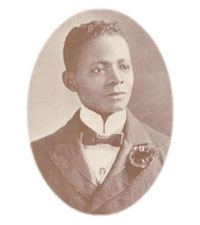
American songwriter
title: "Gussie Davis" type: doc version: 1 created: 2026-02-28 author: "Wikipedia contributors" status: active scope: public tags: ["1863-births", "1899-deaths", "songwriters-from-ohio", "blackface-minstrel-songwriters", "19th-century-american-musicians", "musicians-from-dayton,-ohio", "people-from-whitestone,-queens", "janitors"] description: "American songwriter" topic_path: "arts" source: "https://en.wikipedia.org/wiki/Gussie_Davis" license: "CC BY-SA 4.0" wikipedia_page_id: 0 wikipedia_revision_id: 0
::summary American songwriter ::
::figure[src="https://upload.wikimedia.org/wikipedia/commons/e/e7/Gussie_Davis.jpg" caption="Gussie Lord Davis [n.d.]. Performing Arts Reading Room, [[Library of Congress]]."] ::
Gussie Lord Davis (December 3, 1863 – October 18, 1899) was an American songwriter born in Dayton, Ohio. Davis was one of America's earliest successful African-American music artists, the first black songwriter to become famous on Tin Pan Alley as a composer of popular music.
Early life
Gussie Davis received musical training at the Nelson Musical College in Cincinnati, Ohio, where his application was rejected due to the color of his skin. Instead, he worked as a janitor at a low wage in exchange for private lessons. His first song was published in 1880, "We Sat Beneath the Maple on the Hill"; Davis published it himself, paying a local printer $20, and sold enough copies to make his money back plus a little more. He continued his songwriting efforts with increasing success, publishing many songs and attracting attention, including that of Cincinnati publisher and would-be lyricist, George Propheter.
Career
::figure[src="https://upload.wikimedia.org/wikipedia/commons/3/36/There'd_never_been_no_trouble_if_they'd_kidnapped_a_coon_(words_by_Tom_Browne;_music_by_Gussie_L._Davis).jpg" caption="Cover of sheet music for one of Davis's songs"] ::
In 1886, when Propheter branched out his business to New York and Tin Pan Alley, Davis went with him. He worked steadily, performing as well as writing songs, and making a name for himself. By 1895, he was sufficiently well known to be selected to compete in a contest sponsored by the New York World to find the ten best songwriters in the nation; he placed second with his song, "Send Back the Picture and the Ring", and won a prize of $500 in gold. He performed as a pianist in venues such as Bergen Star Concerts and toured with minstrel groups including his own Davis Operatic and Plantation Minstrels.
Davis wrote a variety of musical forms, including sentimental ballads, comic minstrel songs, art songs, and choral music. He was best known in his own time for his "tear-jerkers". One of these was "Fatal Wedding" (1893), his first national hit; Davis composed the music, a waltz, while the words are credited to William H. Windom, a well-known ballad singer. Another tear-jerker was "In the Baggage Coach Ahead", Davis's most commercially successful composition, selling over a million copies. The success of "In the Baggage Coach" was fueled by the popular female vaudeville singer, Imogene Comer, who made it part of her regular repertoire.
Death
An April 1899 article in The Freeman reported that Davis had purchased a home in Whitestone, New York and that he was recovering from a serious illness. In August of that year, press releases indicated he would appear in A Hot Old Time in Dixie, going on the road in the coming season; this musical farce was Davis's property with Tom McIntosh. On October 18, 1899, Davis died at home in Whitestone.
At the time of his death, Gussie Davis had published more than three hundred songs and certainly left more in manuscript.
Selected songs
- "We Sat Beneath The Maple on the Hill" (1880)
- "Light House by the Sea" (1886)
- "Little Footsteps in the Snow" (1886)
- "Wait Till the Tide Comes In" (1887), words by George Propheter
- "Why Does Papa Stay So Late?" (1889)
- "Fatal Wedding" (1893), words by William H. Windom
- "Only a Bowery Boy" (1894), words by Charles B. Ward
- "Down in Poverty Row" (1895), music by Arthur Trevelyan
- "In the Baggage Coach Ahead" (1896)
- "She Waited at the Altar in Vain" (1897)
- "Only a Nigger Baby" (1897)
- "My Creole Sue" (1898)
- "He Is Coming to Us Dead" (1899)
Also notable is Davis's "Irene, Good Night" (1886), which entered the folk song repertoire, albeit significantly altered, as "Goodnight, Irene" in Negro Folk Songs as Sung by Lead Belly (1936).
Notes
References
References
- "Only a nigger baby (1897)".
- (2012). "Express Office, The (He Is Coming to Us Dead)". [[California State University, Fresno]].
- Campbell, Michael. (2012). "Popular Music in America: The Beat Goes On". Cengage Learning.
- Southern, Eileen. (1997). "The Music of Black Americans: A History". W.W. Norton.
- Sanjek, Russell. (1988). "American Popular Music and Its Business: The First Four Hundred Years". Oxford University Press.
- Brooks, Julay. (December 2012). "Footprints in the Snow: The Intercontinental Journey of a Song (Supplement: Songs that Aren't 'Footprints In The Snow')". Old-Time Herald.
- (November 14, 2007). "Gussie Lord Davis". Library of Congress.
- (2013). "Spreadin' Rhythm Around: Black Popular Songwriters, 1880–1930". Routledge.
- Foster, William. (2013). "Blacks in Blackface: A Sourcebook on Early Black Musical Shows". Scarecrow Press.
- (2003). "Out of Sight: The Rise of African American Popular Music, 1889–1895". Univ. Press of Mississippi.
- (7 May 1999). "The Life And Legend Of Leadbelly". Da Capo Press.
- (Autumn 1978). "In Retrospect: Gussie Lord Davis (1863–1899), Tin Pan Alley Tunesmith". The Black Perspective in Music.
- Cohen, Norm. (2000). "Long Steel Rail: The Railroad in American Folksong". University of Illinois Press.
::callout[type=info title="Wikipedia Source"] This article was imported from Wikipedia and is available under the Creative Commons Attribution-ShareAlike 4.0 License. Content has been adapted to SurfDoc format. Original contributors can be found on the article history page. ::