Fuller Pilch
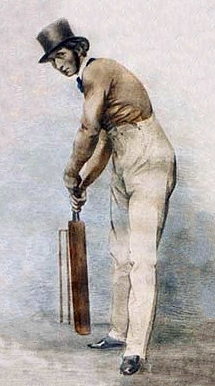
English cricketer
title: "Fuller Pilch" type: doc version: 1 created: 2026-02-28 author: "Wikipedia contributors" status: active scope: public tags: ["1804-births", "1870-deaths", "a-to-k-v-l-to-z-cricketers", "all-england-eleven-cricketers", "cambridge-town-club-cricketers", "english-cricketers-of-1787-to-1825", "english-cricketers-of-1826-to-1863", "english-cricketers", "fast-v-slow-cricketers", "gentlemen-cricketers", "gentlemen-of-england-cricketers", "gentlemen-of-kent-cricketers", "gentlemen-of-nottinghamshire-cricketers", "gentlemen-of-sussex-cricketers", "hampshire-cricketers", "kent-cricketers", "left-handed-v-right-handed-cricketers", "married-v-single-cricketers", "marylebone-cricket-club-cricketers", "non-international-england-cricketers", "norfolk-cricketers", "north-v-south-cricketers", "over-30s-v-under-30s-cricketers", "people-from-brisley", "players-cricketers", "suffolk-cricketers", "surrey-cricketers", "sussex-cricketers", "west-of-england-cricketers", "cricketers-from-norfolk"] description: "English cricketer" topic_path: "people/1800s" source: "https://en.wikipedia.org/wiki/Fuller_Pilch" license: "CC BY-SA 4.0" wikipedia_page_id: 0 wikipedia_revision_id: 0
::summary English cricketer ::
::data[format=table title="Infobox cricketer"]
| Field | Value |
|---|---|
| name | Fuller Pilch |
| image | fuller-pilch.jpg |
| country | England |
| birth_date | |
| birth_place | Horningtoft, Norfolk, England |
| death_date | |
| death_place | Canterbury, Kent, England |
| heightft | 6 |
| heightinch | 1/2 |
| batting | Right-handed |
| bowling | Right arm slow |
| club1 | Norfolk |
| year1 | 1820–1836 |
| club2 | Suffolk |
| year2 | 1830–1847 |
| club3 | Surrey |
| year3 | 1830–1844 |
| club4 | Kent |
| year4 | 1836–1854 |
| club5 | Sussex |
| year5 | 1837–1842 |
| club6 | Hampshire |
| year6 | 1842–1845 |
| :: |
| name = Fuller Pilch | image = fuller-pilch.jpg | country = England | birth_date = | birth_place = Horningtoft, Norfolk, England | death_date = | death_place = Canterbury, Kent, England | heightft = 6 | heightinch = 1/2 | batting = Right-handed | bowling = Right arm slow | club1 = Norfolk | year1 = 1820–1836 | club2 = Suffolk | year2 = 1830–1847 | club3 = Surrey | year3 = 1830–1844 | club4 = Kent | year4 = 1836–1854 | club5 = Sussex | year5 = 1837–1842 | club6 = Hampshire | year6 = 1842–1845 Fuller Pilch (17 March 1804 – 1 May 1870) was an English cricketer, active from 1820 to 1854. He was a right-handed batsman who bowled at a slow pace with a roundarm action. Pilch played in a total of 229 important matches for a large number of teams, although he appeared most frequently for Kent. He is remembered as a pioneer of forward play in batting, and especially for a shot called "Pilch's poke".
Early life
Pilch was born at Horningtoft in Norfolk, the third son of Nathaniel Pilch and his wife Frances (née Fuller). They had been married at Brisley and returned to live there when Pilch was young.
His father was a cobbler and Pilch himself became a tailor. He followed in the footsteps of his two elder brothers, Nathaniel and William, and became a professional cricketer.
Cricket career
Pilch's first appearance at Lord's was a three-day match in July 1820, playing for Norfolk. He then went to Sheffield to play cricket and earn his living as a tailor.
By the late 1820s, he had become the finest batsman in England and acquired the nickname, "the non pareil [unrivalled] hitter".
He appeared 23 times in Gentlemen v Players matches.
In 1833, in highly publicised single wicket matches, Pilch twice defeated Tom Marsden, another prominent batsman of the time.
Demand for his services as a cricketer led him to move to Town Malling, Kent in 1835 and receive a salary of 100 pounds a year. There he kept a tavern attached to the cricket ground.
Pilch moved to Canterbury in 1842 where he kept the Saracen's Head. He served as the first groundsman of the St Lawrence Ground from 1847 to 1868.
Style and technique
Pilch was described as "the greatest batsman ever known until the appearance of W. G. Grace". An early pioneer of batting, Pilch's method of playing the ball forward is seen as an early manifestation of modern batting practices. The main characteristic of his batting was his forward play,{{explain|date=March 2022|reason=Pilch was a trendsetter, the man who introduced forward play. A fine figure of a man, little over six feet tall and well-proportioned, he reached forward and drove with commanding ease. He placed the ball in front of the wicket, the first one to do so with remarkable ease, using a stroke now obsolete, then known as Pilch's poke.
Batting in an era when balls shot through or rose sharply on primitive wickets, keeping batsmen on tenterhooks and runs uniformly low, Pilch managed to score consistently high. He is also credited to have been one of the very first men to have used pads while batting.}} using a shot that was called "Pilch's poke".
Writing in 1862 in his Scores and Biographies, Arthur Haygarth called Pilch "the best batsman that has ever yet appeared". Haygarth further wrote: "His style of batting was very commanding, extremely forward, and he seemed to rush to the best bowling by his long forward play before it had time to shoot or rise, or do mischief by catches".
Though his statistics may seem fairly ordinary as reflected by modern standards, the ten centuries he amassed throughout his entire club and playing career were hailed as "remarkable" in the context of the roundarm bowling and poorly maintained cricket pitches he encountered during his career.
As to the question of how Pilch would compare with the greatest of his successors, editor Sydney Pardon wrote in W. G. Grace's obituary in the 1916 edition of Wisden Cricketers' Almanack:
Pilch died at Canterbury in 1870. He never married.
Legacy
::figure[src="https://upload.wikimedia.org/wikipedia/commons/3/3b/Village_sign_-geograph.org.uk-_311104.jpg" caption="Pilch is remembered on the village sign at [[Horningtoft"] ::
Besides his two brothers, Pilch's nephew William Pilch also played.
In June 2008, it was reported in The Times that Pilch's grave in St Gregory's churchyard in Canterbury was preventing the development of the churchyard into a Canterbury Christ Church University concert hall, as it could not be located for removal. Soon afterwards, the grave was located through the use of an old photograph and the memories of local people.
In the novel Flashman's Lady by George MacDonald Fraser, Pilch is caught and bowled by Harry Flashman in a fictional game at Lord's between Rugby Old Boys and Kent in 1842.
Pilch is mentioned in the song "Gentlemen and Players" on the 2009 cricket concept album The Duckworth Lewis Method, created by Irish duo Thomas Walsh and Neil Hannon.
References
References
- [http://www.britishmuseum.org/research/collection_online/collection_object_details/collection_image_gallery.aspx?assetId=895143001&objectId=3308227&partId=1 Samson]. British Museum
- (30 June 2016). "Cricket in 19th century Norfolk: the legend of Fuller Pilch". Norfolk Record Office.
- (15 March 2019). "Fuller Pilch – the greatest batsman of the pre-Grace era".
- Gideon Haigh, 'Moniker Mania' in ''Wisden 2015'' at p.46. [[William Lillywhite]] was known as "the ''non pareil'' bowler".
- Martineau, G. D.. (1963). "Single-wicket again". ESPNcricinfo.
- Brown, R. J.. "Player Profile: Fuller Pilch". ESPNcricinfo.
- Howat, Gerald M. D.. "Pilch, Fuller".
- (25 June 2008). "They still can't get him out as legendary batsman's grave blocks concert hall plan". The Times.
- (1 July 2008). "Old picture solves grave mystery". BBC News.
::callout[type=info title="Wikipedia Source"] This article was imported from Wikipedia and is available under the Creative Commons Attribution-ShareAlike 4.0 License. Content has been adapted to SurfDoc format. Original contributors can be found on the article history page. ::