Flophouse
Place with cheap lodging
title: "Flophouse" type: doc version: 1 created: 2026-02-28 author: "Wikipedia contributors" status: active scope: public tags: ["homelessness", "hotel-types", "urban-decay"] description: "Place with cheap lodging" topic_path: "general/homelessness" source: "https://en.wikipedia.org/wiki/Flophouse" license: "CC BY-SA 4.0" wikipedia_page_id: 0 wikipedia_revision_id: 0
::summary Place with cheap lodging ::
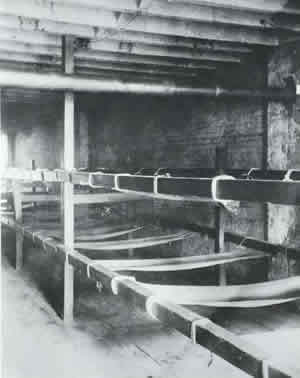
::figure[src="https://upload.wikimedia.org/wikipedia/commons/9/98/Bunks_in_a_Seven-Cent_Lodging-House,_Pell_Street.jpeg" caption="1890}}"] ::
A flophouse (American English) or doss-house (British English) is a place that has very low-cost lodging, providing space to sleep and minimal amenities.
Characteristics
Historically, flophouses, or British "doss-houses", have been used for overnight lodging by those who needed the lowest-cost alternative to staying with others, shelters, or sleeping outside. Generally, rooms are small, bathrooms are shared, and bedding is minimal, sometimes with mattresses or mats on the floor, or canvas sheets stretched between two horizontal beams creating a series of hammock-like beds.
People who make use of these places have often been called transients and have been between homes. Quarters are typically very small, and may resemble office cubicles more than a regular room in a hotel or an apartment building. Some flophouses qualify as boarding houses, but only if they offer meals.
American flophouses date at least to the 19th century, but the term flophouse itself is only attested from around the early 1900s, originating in hobo slang. In the past, flophouses were sometimes called lodging houses or workingmen's hotels and catered to hobos and transient workers such as seasonal railroad and agriculture workers, or migrant lumberjacks who would travel west during the summer to work and then return to an eastern or midwestern city which ran along the rail lines, such as Chicago, to stay in a flophouse during the winter. This is described in the 1930 novel The Rambling Kid by Charles Ashleigh and the 1976 book The Human Cougar by Lloyd Morain. Another theme in Morain's book is the gentrification which was then beginning and which has led cities to pressure flophouses to close.
::figure[src="https://upload.wikimedia.org/wikipedia/commons/8/86/Flophouse.jpg" caption="A flophouse-style room"] ::
Some city districts with flophouses in abundance became well known in their own right, such as the Bowery in Manhattan, New York City. Since the middle 20th century, reforms there have gradually made flophouses scarcer. The resulting gentrification and higher real-estate value have further eroded the ability of flophouses and inexpensive boarding-style hotels to make a profit.
21st-century revival
In the 2010s, the high cost of housing in cities such as San Francisco saw an increase in the number of flophouses. The modern flophouses, sometimes marketed as co-living "pods", usually have partitions between beds for privacy, and are created from existing houses or apartments. They are often marketed toward commuters who stay in the city during the workweek.
Cage homes in Hong Kong
Cage homes were built in colonial Hong Kong in the 1950s for single working men from mainland China. Cage homes are described as "wire mesh cages resembling rabbit hutches crammed into a dilapidated apartment."{{Cite episode | publisher = NBCNews.com | credits = Kelvin Chan (Director) | title = Poor in cages show dark side of Hong Kong boom | work = Economy Watch | access-date = 2013-02-13 | date = 2013-02-07 | url = https://www.nbcnews.com/business/economywatch/poor-cages-show-dark-side-hong-kong-boom-1B8287394 | archive-date = 2020-04-01 | archive-url = https://web.archive.org/web/20200401130531/https://www.nbcnews.com/business/economywatch/poor-cages-show-dark-side-hong-kong-boom-1B8287394 | url-status = live | title = Hong Kong cage home rents soar above luxury flat | work = Reuters | access-date = 2013-02-13 | date = 2010-04-28 | url = https://www.reuters.com/article/2010/04/28/us-hongkong-poverty-idUSTRE63R2KY20100428 | archive-date = 2020-04-01 | archive-url = https://web.archive.org/web/20200401130546/https://www.reuters.com/article/us-hongkong-poverty/hong-kong-cage-home-rents-soar-above-luxury-flat-idUSTRE63R2KY20100428 | url-status = dead | publisher = CNN.com | credits = Benjamin Gottlieb, Christie Hang (Director) | title = Hong Kong's poorest living in 'coffin homes' | access-date = 2013-02-13 | date = 2011-07-26 | url = http://www.cnn.com/2011/WORLD/asiapcf/07/25/hongkong.coffin.homes/ | archive-date = 2020-04-01 | archive-url = https://web.archive.org/web/20200401130536/http://www.cnn.com/2011/WORLD/asiapcf/07/25/hongkong.coffin.homes/ | url-status = live
Michael Adorjan, a University of Hong Kong criminology professor, has noted that "The United Nations has called cage and cubicle homes an 'insult to human dignity.{{Cite web | last = Michael Adorjan | title = Cage homes in Hong Kong: capitalism this Christmas | access-date = 2013-02-13 | date = 2011-12-21 | url = http://www.crimetalk.org.uk/index.php?option=com_content&view=article&id=570%3Acage-homes-in-hong-kong&catid=38&Itemid=41 | archive-date = 2020-04-01 | archive-url = https://web.archive.org/web/20200401130714/http://www.crimetalk.org.uk/index.php?option=com_content&view=article&id=570%3Acage-homes-in-hong-kong&catid=38&Itemid=41 | url-status = dead
Cage hotels in the United States {{anchor|Cage hotel}}
Cage hotels, a form of single-room occupancy, were common in Chicago at the turn of the 20th century; an estimated 40,000 to 60,000 people lived in them during the winter.
::quote[attribution="corrugated iron]]. Since these walls were always one to three feet short of the floor or ceiling, the open space was sealed off with [[chicken wire]], hence the name "cage hotels."{{Cite encyclopedia"] These were lofts or other large, open buildings that were subdivided into tiny cubicles using boards or sheets of [[Corrugated galvanised iron ::
| title = Single Room Occupancy Hotels | encyclopedia = Encyclopedia of Chicago | access-date = 2013-02-13 | url = http://www.encyclopedia.chicagohistory.org/pages/613.html | archive-date = 2020-04-01 | archive-url = https://web.archive.org/web/20200401130601/http://www.encyclopedia.chicagohistory.org/pages/613.html | url-status = live
A 1958 survey by Christopher Jencks found that homeless men preferred cage hotels over shelters for reasons of privacy and security.{{Cite news | last = Christopher Jencks | title = Housing the Homeless | work = The New York Review of Books | access-date = 2013-02-13 | url = http://www.nybooks.com/articles/archives/1994/may/12/housing-the-homeless/ | archive-date = 2016-11-05 | archive-url = https://web.archive.org/web/20161105080414/https://www.nybooks.com/articles/1994/05/12/housing-the-homeless/ | url-status = live
A similar preference for cage hotels over shelters was reported in turn of the century New York City, where single working men ranked their housing preference in the following order:
::quote[attribution="dormitories]], dormitories to flops, and flops to the city's shelters. Men could act on these preferences by moving as their incomes increased.{{Cite news"] They preferred lodging and boarding houses to cages, cages to [[Dormitory ::
|issue = Summer |last = Filer |first = Randall K |author-link = Randall K. Filer |title = Opening the Door to Low-Cost Housing |work = City Journal |access-date = 2013-02-13 |date = 1992 |url = http://www.city-journal.org/article01.php?aid=1529 |url-status = dead |archive-url = https://web.archive.org/web/20120620080305/http://www.city-journal.org/article01.php?aid=1529 |archive-date = 2012-06-20
"Regulatory efforts to combat low-cost 'cage hotels,' ... [has been] a driver of the expansion of the homeless population in US cities", according to Jencks.{{Cite news | last = Reihan Salam | title = The Agenda: Stephen Smith on the Missing Driverless Trains | work = National Review Online | access-date = 2024-11-02 | url = https://www.nationalreview.com/the-agenda/stephen-smith-missing-driverless-trains-reihan-salam/ | archive-date = 2025-03-29 | archive-url = https://archive.today/20250329135808/https://www.nationalreview.com/the-agenda/stephen-smith-missing-driverless-trains-reihan-salam/ | url-status = live
References
References
- (22 February 2005). "The Last of the Mohicans | The Village Voice".
- "N.Y. Court says flophouses fall under rent stabilization laws".
- Tierney, John. (14 January 1996). "The Big City;Save the Flophouses". The New York Times.
- [http://ny.therealdeal.com/articles/from-flophouses-to-fancy-on-the-bowery From flophouses to fancy on the Bowery] {{webarchive. link. (2008-10-17 from [http://ny.therealdeal.com/ The Real Deal Magazine] {{webarchive). link. (2013-11-16)
- (2019-06-05). "Startup rents bunkbeds in the Tendernob for $1,200 per month".
- Gargan, Edward A.. (14 July 1996). "In Rich Hong Kong, Cages as Homes for the Poor". The New York Times.
- Prout, Katie. (2021-04-02). "Inside the Last Men's Hotel in Chicago".
::callout[type=info title="Wikipedia Source"] This article was imported from Wikipedia and is available under the Creative Commons Attribution-ShareAlike 4.0 License. Content has been adapted to SurfDoc format. Original contributors can be found on the article history page. ::