Enterococcus
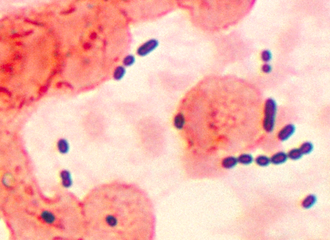
Genus of bacteria
title: "Enterococcus" type: doc version: 1 created: 2026-02-28 author: "Wikipedia contributors" status: active scope: public tags: ["enterococcus", "bacteria-genera", "gram-positive-bacteria", "pathogenic-bacteria"] description: "Genus of bacteria" topic_path: "general/enterococcus" source: "https://en.wikipedia.org/wiki/Enterococcus" license: "CC BY-SA 4.0" wikipedia_page_id: 0 wikipedia_revision_id: 0
::summary Genus of bacteria ::
| image = Enterococcus_histological_pneumonia_01.png | image_caption = Enterococcus sp. infection in pulmonary tissue | taxon = Enterococcus | authority = (ex Thiercelin & Jouhaud 1903) Schleifer & Kilpper-Bälz 1984 | subdivision_ranks = Species | subdivision_ref = | subdivision = * E. alcedinis
- E. aquimarinus
- E. asini
- E. avium
- E. bulliens
- E. burkinafasonensis
- E. caccae
- E. camelliae
- E. canintestini
- E. canis
- E. casseliflavus
- E. cecorum
- E. columbae
- E. crotali
- E. devriesei
- E. diestrammenae
- E. dispar
- E. durans
- E. eurekensis
- E. faecalis
- E. faecium
- E. gallinarum
- E. gilvus
- E. haemoperoxidus
- E. hermanniensis
- E. hirae
- E. hulanensis
- E. innesii
- E. italicus
- E. lactis
- E. lemanii
- E. malodoratus
- E. massiliensis
- E. mediterraneensis
- E. moraviensis
- E. mundtii
- E. olivae
- E. pallens
- E. phoeniculicola
- E. plantarum
- E. pseudoavium
- E. quebecensis
- E. raffinosus
- E. ratti
- E. rivorum
- E. rotai
- E. saccharolyticus
- E. saigonensis
- E. silesiacus
- E. sulfureus
- E. solitarius
- E. songbeiensis
- E. termitis
- E. thailandicus
- E. ureasiticus
- E. ureilyticus
- E. viikkiensis
- E. villorum
- E. wangshanyuanii
- E. xiangfangensis
- E. xinjiangensis
Enterococcus is a large genus of lactic acid bacteria of the phylum Bacillota. Enterococci are Gram-positive cocci that often occur in pairs (diplococci) or short chains, and are difficult to distinguish from streptococci on physical characteristics alone. Two species are common commensal organisms in the intestines of humans: E. faecalis (90–95%) and E. faecium (5–10%). Rare clusters of infections occur with other species, including E. durans, E. casseliflavus, E. gallinarum, and E. raffinosus.
Physiology and classification
Enterococci are facultative anaerobic organisms, i.e., they are capable of cellular respiration in both oxygen-rich and oxygen-poor environments. Though they are not capable of forming spores, enterococci are tolerant of a wide range of environmental conditions: extreme temperature (10–45 °C), pH (4.6–9.9), and high sodium chloride concentrations.
E. faecium and E. faecalis can be differentiated based on their carbohydrate metabolism: E. faecium consistently metabolizes lactose but not melezitose or inositol, whereas E. faecalis reliably metabolizes sorbitol and sucrose but lacks the ability to utilize L-arabinose, melibiose, or raffinose. Less is known of other species; E. durans share most of the important carbohydrate metabolism with E. faecium.
Enterococci exhibit variable hemolysis on blood agar. Differences occur between species, and between strains of species. More virulent organisms are more likely to exhibit alpha (partial) or beta (complete) hemolysis than less virulent specimens of Enterococcus, which frequently exhibit gamma (absent) hemolysis.
History
Members of the genus Enterococcus (from Greek έντερο, éntero 'intestine' and κοκκος, coccos 'granule') were classified as group D Streptococcus until 1984, when genomic DNA analysis indicated a separate genus classification would be appropriate.
Evolution
This genus appears to have evolved to .
Pathology
Important clinical infections caused by Enterococcus include urinary tract infections (see Enterococcus faecalis), bacteremia, bacterial endocarditis, diverticulitis, meningitis, and spontaneous bacterial peritonitis. Sensitive strains of these bacteria can be treated with ampicillin, penicillin and vancomycin. In catheterized patients receiving intensive care, Enterococcus spp., have been reported the dominant cause of urinary tract infections, particularly in patients treated with cephalosporin antibiotics. Recent work has shown that multiple genetically distinct Enterococcus sequence types, including antibiotic resistant and high risk clones, can coexist in the same urine sample from a single ICU patient, with the more virulent lineage often present only as a minority subpopulation - undetectable by standard diagnostics. Urinary tract infections can be treated specifically with nitrofurantoin, even in cases of vancomycin resistance. ::figure[src="https://upload.wikimedia.org/wikipedia/commons/b/ba/Diagnostic_algorithm_of_possible_bacterial_infection.png" caption="Example of a workup algorithm of possible bacterial infection in cases with no specifically requested targets (non-bacteria, mycobacteria etc.), with most common situations and agents seen in a New England community hospital setting. ''Enterococcus'' is included near bottom-center."] ::
Meningitis
Main article: Meningitis
Enterococcal meningitis is a rare complication of neurosurgery. It often requires treatment with intravenous or intrathecal vancomycin, yet it is debatable as to whether its use has any impact on outcome: the removal of any neurological devices is a crucial part of the management of these infections. New epidemiological evidence has shown that enterococci are major infectious agent in chronic bacterial prostatitis. Enterococci are able to form biofilm in the prostate gland, making their eradication difficult. Cases of enterococcal meningitis, in the absence of trauma or surgery, should raise suspicion of an underlying intestinal pathology (e.g., strongyloidiasis).
Bloodstream infections
Main article: Bloodstream infections
Enterococcus species are frequent causes of hospital-acquired bloodstream infections (BSIs). They ranked as the second most common cause of ICU-acquired BSIs in Europe in 2019. Enterococcal BSIs have high mortality rates, typically around 20–30%. Outcomes tend to be worse for E. faecium infections, which often exhibit higher antibiotic resistance (e.g. high rates of vancomycin resistance). The incidence of vancomycin-resistant Enterococcus infections has been rising globally. In a 2014–2021 cohort study of 584 patients with enterococcal BSI, the 30-day mortality was 27.5%. Mortality was significantly higher when the infection was caused by vancomycin-resistant E. faecium (36.6%) or vancomycin-susceptible E. faecium (31.8%) than when caused by E. faecalis (23.2%). Enterococcal bacteremia can also lead to infective endocarditis.
Antibacterial resistance
From a medical standpoint, an important feature of this genus is the high level of intrinsic antibiotic resistance. Some enterococci are intrinsically resistant to β-lactam-based antibiotics (penicillins, cephalosporins, carbapenems), as well as many aminoglycosides. In the last two decades, particularly virulent strains of Enterococcus that are resistant to vancomycin (vancomycin-resistant Enterococcus, or VRE) have emerged in nosocomial infections of hospitalized patients, especially in the US. Other developed countries, such as the UK, have been spared this epidemic, and, in 2005, Singapore managed to halt an epidemic of VRE. Although quinupristin/dalfopristin (Synercid) was previously indicated for treatment of VRE in the USA, the FDA approval for this indication has since been retracted. The rationale for the retraction of Synercid's indication for VRE was based upon poor efficacy in E. faecalis, which is implicated in the vast majority of VRE cases. Tigecycline has also been shown to have antienterococcal activity, as has rifampicin. However, resistance to these last-resort antibiotics, including linezolid and daptomycin, is increasingly being reported, involving complex genetic mechanisms that pose new challenges for treatment.
Bacillus haynesii CD223 and Advenella mimigardefordensis SM421 can inhibit the growth of Enterococcus spp.
Water quality
In bodies of water, the acceptable level of contamination is very low; for example in the state of Hawaii, and most of the United States, the limit for water off its beaches is a five-week geometric mean of 35 colony-forming units per 100 ml of water, above which the state may post warnings to stay out of the ocean. In 2004, measurement of enterococci took the place of fecal coliforms as the new American federal standard for water quality at public saltwater beaches and alongside Escherichia coli at freshwater beaches. It is believed to provide a higher correlation than fecal coliform with many of the human pathogens often found in city sewage.
References
References
- "Enterococcus". List of Prokaryotic names with Standing in Nomenclature ([[LPSN]]).
- (2002). "The Enterococci: Pathogenesis, Molecular Biology, and Antibiotic Resistance". ASM Press.
- (2025-06-12). "Heterogeneity and metabolic diversity among Enterococcus species during long-term colonization". Microbiology Spectrum.
- (2000). "Gram-Positive Pathogens". ASM Press.
- (June 2009). "The ecology, epidemiology and virulence of Enterococcus". Microbiology.
- (June 2003). "Comparative study using type strains and clinical and food isolates to examine hemolytic activity and occurrence of the cyl operon in enterococci". Journal of Clinical Microbiology.
- (1984). "Transfer of ''Streptococcus faecalis'' and ''Streptococcus faecium'' to the genus ''Enterococcus'' nom. rev. as ''Enterococcus faecalis'' comb. nov. and ''Enterococcus faecium'' comb. nov.". Int. J. Syst. Bacteriol..
- (May 2017). "Tracing the Enterococci from Paleozoic Origins to the Hospital". Cell.
- (2004). "Sherris Medical Microbiology". McGraw Hill.
- (October 2017). "Current concepts and future strategies in the antimicrobial therapy of emerging Gram-positive spontaneous bacterial peritonitis". World Journal of Hepatology.
- (1996). "Baron's Medical Microbiology". Univ of Texas Medical Branch.
- (2023-02-07). "Antibiotic use during coronavirus disease 2019 intensive care unit shape multidrug resistance bacteriuria: A Swedish longitudinal prospective study". Frontiers in Medicine.
- (2025-03-04). "Bacteriuria and antibiotic use during the third wave of COVID-19 intensive care in Sweden". Infectious Diseases.
- (January 2001). "Nitrofurantoin is active against vancomycin-resistant enterococci". Antimicrobial Agents and Chemotherapy.
- (2006). "Post-surgical enterococcal meningitis: clinical and epidemiological study of 20 cases". Scandinavian Journal of Infectious Diseases.
- "Enterococcus sp rRNA [Presence] in Specimen by Probe". Regenstrief Institute, Inc..
- (2023-12-01). "Enterococcal meningitis associated with ''Strongyloides'' infection: a case report and literature review". Le Infezioni in Medicina.
- (2024). "Clinical characteristics, predisposing factors and outcomes for Enterococcus faecalis versus Enterococcus faecium bloodstream infections: a prospective multicentre cohort study". European Journal of Clinical Microbiology & Infectious Diseases.
- (2024-06-27). "Risk Factors for 30-Day Mortality in Nosocomial Enterococcal Bloodstream Infections". Antibiotics.
- (April 2008). "Control of a hospital-wide vancomycin-resistant Enterococci outbreak". American Journal of Infection Control.
- (2001). "Quinupristin/dalfopristin and linezolid: spectrum of activity and potential roles in therapy--a status report". Current Clinical Topics in Infectious Diseases.
- (March 1993). "In vitro activity of RP59500, an injectable streptogramin antibiotic, against vancomycin-resistant Gram-positive organisms". Antimicrobial Agents and Chemotherapy.
- (June 2002). "An Enterococcus faecalis ABC homologue (Lsa) is required for the resistance of this species to clindamycin and quinupristin-dalfopristin". Antimicrobial Agents and Chemotherapy.
- "Enterococcus sp DNA [Presence] by NAA with probe detection in Positive blood culture". Regenstrief Institute, Inc..
- Lu, Zhaoxiang. (2025-01-14). "Resistance to last-resort antibiotics in enterococci". FEMS Microbiology Reviews.
- (December 2022). "Suppression of Streptococcosis and Modulation of the Gut Bacteriome in Nile Tilapia (Oreochromis niloticus) by the Marine Sediment Bacteria Bacillus haynesii and Advenella mimigardefordensis". Microbiology Spectrum.
- "Clean Water Branch". Hawaii State Department of Health.
- (16 November 2004). "Water Quality Standards for Coastal and Great Lakes Recreation Waters; Final Rule". Federal Register.
- (2004). "Comparison of E. coli, enterococci, and fecal coliform as indicators for brackish water quality assessment". Water Environment Research.
::callout[type=info title="Wikipedia Source"] This article was imported from Wikipedia and is available under the Creative Commons Attribution-ShareAlike 4.0 License. Content has been adapted to SurfDoc format. Original contributors can be found on the article history page. ::