Edward Bulfin
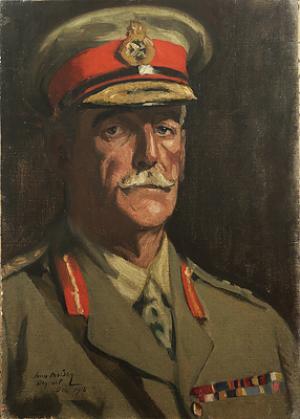
British Army general
title: "Edward Bulfin" type: doc version: 1 created: 2026-02-28 author: "Wikipedia contributors" status: active scope: public tags: ["1862-births", "1939-deaths", "military-personnel-from-bournemouth", "burials-at-the-wimborne-road-cemetery,-bournemouth", "british-militia-officers", "british-army-generals", "military-personnel-from-county-dublin", "british-army-generals-of-world-war-i", "british-army-personnel-of-the-second-boer-war", "knights-commander-of-the-order-of-the-bath", "commanders-of-the-royal-victorian-order", "people-educated-at-stonyhurst-college", "people-from-boscombe", "people-from-rathfarnham", "green-howards-officers", "royal-irish-fusiliers-officers", "members-of-the-order-of-the-holy-sepulchre", "irish-officers-in-the-british-army"] description: "British Army general" topic_path: "history" source: "https://en.wikipedia.org/wiki/Edward_Bulfin" license: "CC BY-SA 4.0" wikipedia_page_id: 0 wikipedia_revision_id: 0
::summary British Army general ::
::data[format=table title="Infobox military person"]
| Field | Value |
|---|---|
| honorific_prefix | General |
| name | Sir Edward Bulfin |
| honorific_suffix | |
| image | EdwardBulfin.jpg |
| birth_date | |
| birth_place | Rathfarnham, Ireland |
| death_date | |
| death_place | Boscombe, Bournemouth, England |
| allegiance | United Kingdom |
| branch | British Army |
| serviceyears | 1884–1926 |
| rank | General |
| unit | Royal Irish Fusiliers |
| Green Howards | |
| commands | XXI Corps |
| 60th (2/2nd London) Division | |
| 28th Division | |
| 2nd Brigade | |
| Essex Brigade | |
| battles | Second Boer War |
| First World War | |
| awards | Knight Commander of the Order of the Bath |
| Commander of the Royal Victorian Order | |
| Knight Commander of the Equestrian Order of the Holy Sepulchre (Holy See) | |
| :: |
|honorific_prefix = General |name= Sir Edward Bulfin |honorific_suffix = |image= EdwardBulfin.jpg |image_size= |alt= |caption= |nickname= |birth_date= |birth_place= Rathfarnham, Ireland |death_date= |death_place= Boscombe, Bournemouth, England |placeofburial= |allegiance= United Kingdom |branch= British Army |serviceyears= 1884–1926 |rank= General |servicenumber= |unit= Royal Irish Fusiliers Green Howards |commands= XXI Corps 60th (2/2nd London) Division 28th Division 2nd Brigade Essex Brigade |battles= Second Boer War First World War |awards= Knight Commander of the Order of the Bath Commander of the Royal Victorian Order Knight Commander of the Equestrian Order of the Holy Sepulchre (Holy See) |relations= |laterwork= General Sir Edward Stanislaus Bulfin, (6 November 1862 − 20 August 1939) was a British Army general during the First World War, where he established a reputation as an excellent commander at the brigade, divisional and corps levels. He was most noted for his actions during the First Battle of Ypres, when he organized impromptu forces to slow down the German assault. In 1917–18 he commanded the XXI Corps in the Sinai and Palestine campaign.
Early life
Bulfin was born Woodtown Park, Rathfarnham, County Dublin, the second son of Patrick Bulfin and Teresa Clare Carroll. He was educated at Stonyhurst College, and then at Kensington Catholic Public School. Although he attended Trinity College, Dublin, he did not take a degree, choosing a military career instead.
Military career
From Dublin University he entered the Armagh Militia from where he was commissioned into the Princess of Wales's Own (Yorkshire Regiment) in November 1884, following militia service with the Royal Irish Fusiliers. He was dispatched to India on 31 December 1889, and first saw active service in Burma in that year. He was promoted to captain on 30 January 1895. In 1898, after returning to England, he was appointed Garrison Adjutant at Dover, and in November embarked for South Africa with his fellow Irishman General Sir William Butler, as Assistant Military Secretary.
When the Second Boer War broke out, in 1899 he was appointed brigade major to the 9th Brigade. He saw action at several skirmishes in South Africa, and was promoted to a brevet major in November 1900. He was present at several battles including Belmont and Graspan, Modder River, Magersfontein, Rhenoster and Lindley. He returned to the regular rank of captain in his regiment on 12 December 1901, and served in South Africa until the end of the war, when he left Cape Town on board the in late June 1902, arriving at Southampton the following month.
On his return to England he received a brevet promotion to lieutenant colonel in the South Africa honours list published on 26 June 1902, and abandoned regimental soldiering in favour of a staff career. and on 28 November 1903 he received the substantive rank of major. From November 1906 he served as assistant adjutant and quartermaster general (AA&QMG) for Cape Colony, in succession to Colonel Nevil Macready, and for which he was promoted to brevet colonel. While serving in this assignment he was promoted to colonel in July 1908.
After returning to England "his career took a major step forward", as he was given command of the Essex Infantry Brigade, an unusual appointment as Bulfin had never commanded a battalion. In late June he was promoted again, this time to the temporary rank of brigadier general, and appointed to the prestigious command of the 2nd Infantry Brigade,
From 1914 to 1939 he was regimental colonel of Alexandra, Princess of Wales's Own (Yorkshire Regiment).
First World War
On the outbreak of the First World War in August 1914, Bulfin and the 2nd Brigade were transported to the Western Front as part of the original British Expeditionary Force (BEF). It was during this time that Bulfin was appointed colonel of his old regiment, the Green Howards, taking over from Lieutenant General Sir William Franklyn.
In December, Bulfin, promoted to major general in October, was made GOC of the newly formed 28th Division, and led this formation through the heavy German gas attacks at the Second Battle of Ypres, and also at the Battle of Loos in the latter part of the year.
He returned to the Western Front in June 1916, six months after having become GOC of the 60th (2/2nd London) Division during the Battle of the Somme, although the division did not play a significant role in the offensive.
Salonika and Palestine
::figure[src="https://upload.wikimedia.org/wikipedia/commons/c/cf/British_generals_Jerusalem_1918_AWM_A02746A.jpeg" caption="Bulfin, third from right, with other generals on the Mount of Olives, Jerusalem, 19 March 1918}}"] ::
In December 1916, the 60th Division was transferred to Salonika, although they remained for only six months and took part in no serious fighting.
Moving to Palestine in June 1917, Bulfin was promoted in August to temporary lieutenant general and given command of XXI Corps. He proved a capable corps commander, leading his formation through Ottoman defenses at the Third Battle of Gaza, opening the way for the capture of Jerusalem. He later commanded the corps in the overwhelming victory at the Battle of Megiddo in the waning days of the war.
Post war
After the armistice, Bulfin, promoted to the permanent rank of lieutenant general on 1 January 1919, remained in the army in a variety of staff positions, gaining a promotion to full general in May 1925 and finally retiring in January 1926. His first position was to remain in the Middle East and Egypt in particular. During the Egyptian revolution of 1919 he was known to be a very effective military leader in putting down the unrest especially through organising 'flying columns'. In the summer of 1920 he was offered the job of Chief of Police and Head of Secret Intelligence in Ireland based on his loyalty to the Crown, his Irish origins and his swift handling of the nationalist unrest in Egypt in 1919. Bulfin refused the appointment on the grounds that as a Catholic and an Irishman it would be distasteful to him to do any work which was not of a purely military character.
Bufin wrote the foreword to Philip Hugh Dalbiac's History of the 60th Division (2/2nd London Division).
He died of heart failure at the age of 76 at his home in Boscombe, Bournemouth, Dorset, on 20 August 1939, shortly before the beginning of the Second World War. He was buried "in an easily missed corner" at Wimborne Road Cemetery, Bournemouth, close to the graves of two of his sisters. On the unpretentious headstone, above his name and decorations, is inscribed 'Here sleepeth until the great reveille sounds'."
Family
Bulfin married Mary Frances Lonergan in 1898 (immediately prior to posting to South Africa), with whom he had two children.
Arms
|escutcheon = Bendy of six Or and Vert on a chief Ermine between two bees Proper a sword in bend sinister blade upwards also Proper passing through a civic crown of the second resting on the hilt. |crest = A demi-lion Or holding in the dexter paw a sword passing through a civic crown as in the arms and charged on the shoulder with a trefoil slipped Vert. |torse = Of the colours. |motto = Vincit Veritas |notes = Confirmed 19 June 1916 by George James Burtchaell, Deputy Ulster King of Arms.}}
References
Bibliography
References
- (January 2018). "Library of Ireland".
- (2004). "Edward Bulfin".
- {{London Gazette. (11 November 1884)
- "Centre for War Studies – University of Birmingham".
- {{London Gazette. (8 December 1882)
- {{London Gazette. (2 February 1900)
- {{London Gazette. (8 April 1902)
- (4 July 1902). "The Army in South Africa – Troops returning home".
- {{London Gazette. (26 June 1902)
- {{London Gazette. (16 January 1903)
- From October 1902 to 1904, he served as deputy assistant adjutant-general (DAAG) with the [[2nd Infantry Division (United Kingdom). 2nd Division]], [[I Corps (United Kingdom). 1st Army Corps]],{{London Gazette. (2 January 1903)
- {{London Gazette. (3 July 1908)
- "The Green Howards (Alexandra, Princess of Wales's Own Yorkshire Regiment)". regiments.org.
- {{London Gazette. (24 November 1914)
- {{London Gazette. (3 November 1914)
- {{London Gazette. (14 May 1918)
- {{London Gazette. (31 December 1918)
- {{London Gazette. (7 July 1925)
- (23 November 2012). "Egypt, 1798–1952: Her Advance Towards a Modern Identity". Routledge.
- Philip Hugh Dalbiac. "History of the 60th Division (2/2nd London Division)".
- "Grants and Confirmations of Arms Vol. L". National Library of Ireland.
::callout[type=info title="Wikipedia Source"] This article was imported from Wikipedia and is available under the Creative Commons Attribution-ShareAlike 4.0 License. Content has been adapted to SurfDoc format. Original contributors can be found on the article history page. ::