Agrasen
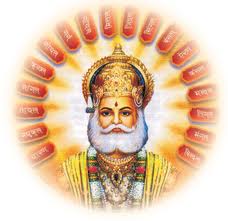
Legendary Indian king of Agroha
title: "Agrasen" type: doc version: 1 created: 2026-02-28 author: "Wikipedia contributors" status: active scope: public tags: ["legendary-indian-people", "people-from-hisar-district"] description: "Legendary Indian king of Agroha" topic_path: "geography/india" source: "https://en.wikipedia.org/wiki/Agrasen" license: "CC BY-SA 4.0" wikipedia_page_id: 0 wikipedia_revision_id: 0
::summary Legendary Indian king of Agroha ::
::data[format=table title="Infobox royalty"]
| Field | Value |
|---|---|
| title | Maharaja |
| name | Agrasen |
| image | Maharja Agrasena.jpeg |
| predecessor | Maharaja Vallabhsen |
| successor | Shail |
| queen | Nandini |
| issue | Vibhu |
| royal house | Raghuvansham |
| dynasty | |
| father | Maharaja Vallabh |
| mother | Bhagwati Devi |
| :: |
| title = Maharaja | name = Agrasen | image = Maharja Agrasena.jpeg | caption = | predecessor = Maharaja Vallabhsen | successor = Shail | queen = Nandini | issue = Vibhu | royal house = Raghuvansham | dynasty = | father = Maharaja Vallabh | mother = Bhagwati Devi Agrasen, most commonly known as Maharaja (literally, great king) Agrasen, was a legendary Indian king of Agroha, a city of traders in the district of Hisar, Haryana. He is a descendant of the Hindu deity, Shri Ramchandra's elder son, Kush. He is credited with the establishment of a kingdom of traders in Northern India named Agroha, and is known for his compassion in refusing sacrificial slaughter of animals in yajnas. Goddess Mahalakshmi bestowed prosperity for him and his descendants.
The Agrawals, a community of traditional traders from northern India, regard Maharaja Agrasen as their forefather and a historical figure who established the foundations of their community in the Kingdom of Agroha. In fact, the term Agrawal means "descendants of Agrasen" or "people of Agroha".
| total_width = 252 | image1 = Stamp of India - 1976 - Colnect 327901 - Maharaja Agrasen Commemoration.jpeg | alt1 = The image depicts a commemorative stamp issued by India in 1976 honoring Maharaja Agrasen. The stamp features an illustration of Maharaja Agrasen, often depicted in royal attire, emphasizing his historical significance as a revered figure in the Agrawal community. The background is typically adorned with traditional motifs, highlighting his connection to Indian culture and heritage. The stamp serves to celebrate his legacy and the values he represents, particularly in relation to the Agrawal community’s origins. | caption1 = Postage stamp issued by the Government of India in 1976, commemorating Maharaja Agrasen's 5100th birth anniversary. | image2 = Agrasen maldives.jpg | alt2 = A regal depiction of Maharaja Agrasen, a legendary king revered in Indian history and mythology, seated on a grand throne adorned with intricate designs and flanked by two lions symbolizing strength and royalty. He is portrayed in traditional royal attire, with elaborate jewelry and a crown, holding a scepter. The artwork has a vibrant blue background with decorative floral patterns, enhancing the royal aura. The text at the bottom identifies him as "Maharaja Agrasen," with additional inscriptions describing the artwork was crafted for a Maldives postage stamp in 2016. The entire design reflects a blend of respect, reverence, and artistic grandeur dedicated to the king's legacy. | caption2 = Postage stamp issued by the Maldives in 2016 on Maharaja Agrasen's birth anniversary. | direction = vertical
The occasion of his birth anniversary called Agrasen Jayanti is celebrated in the Indian states of Haryana, Punjab, Rajasthan, and Uttar Pradesh where it is recognized as a public or a gazetted holiday. The Government of India in 1976 commemorated the 5100th birth anniversary of Maharaja Agrasen by issuing a postage stamp depicting him, and so did Maldives in 2016 as a tribute to the contributions of the Agrawal community, a prominent business group in India, in the growing trade relationship between the Maldives and India. The eastern wing of the modern day Agroha Dham temple is dedicated to Maharaja Agrasen, serving as a significant cultural and heritage center for the Agrawal community.
::figure[src="https://upload.wikimedia.org/wikipedia/commons/c/cc/Agrasen_ki_Baoli,_New_Delhi,India-_20070127.jpg" caption="978-81-269-0616-1}} (This author considers King Agrasen an actual historical figure) during the [[Mahabharat]] epic era."] ::
History
::figure[src="https://upload.wikimedia.org/wikipedia/commons/1/19/Agroha_Dhaam_Hindu_Temple.jpg" caption="Maharaja Agrasen]]." alt="The image showcases the grand entrance to the Agroha Dham Hindu temple, with three towering, ornately decorated structures rising prominently against an overcast sky. The central structure is the tallest, with a distinctive brownish-red facade adorned with symmetrically placed windows and carved niches that add depth and texture. Its dome has a rounded, layered design crowned with a golden pinnacle at the top. Flanking the central tower are two slightly shorter towers, each adorned with vibrant colors and intricate artwork. Both towers have sky-blue panels accented with floral patterns and traditional Hindu motifs in hues of pink, gold, and red. The top of each of these side towers is capped with lotus-like structures, topped by golden finials. At the main entrance of the temple, a statue depicting a divine chariot pulled by horses and guided by warriors or deities stands prominently, drawing attention. Below the chariot, a large archway leads into the temple, with detailed architectural elements on either side. The steps leading up to the entrance are wide and surrounded by well-maintained greenery, with various plants, shrubs, and flowering bushes lining the walkway. The scene is bustling with visitors, some ascending the stairs towards the temple, while others are seen standing or moving around in groups. The pathway leading up to the temple is clean and well-kept, bordered by a trimmed lawn and decorative plants, contributing to the peaceful and reverent atmosphere."] ::
Bharatendu Harishchandra (1850-1885), a renowned Agrawal author and poet, compiled the legend of Maharaja Agrasen in his 1871 essay Agarwalon ki Utpatti ("Origins of Agrawals and Agrahari"). Bhartendu is not clear about his sources, stating that he compiled the legend from "tradition" and "ancient writings", naming one of these texts as Sri Mahalakshmi Vrat Ki Katha ("The Story of the Fast for Goddess Mahalakshmi"). He claimed to have found this text in a "later" part of the Bhavishya Purana, which exists in several recensions. However, subsequent researchers were unsuccessful in tracing this text in any published version of the "Bhavishya Purana. In 1976, the Agrawal historian Satyaketu Vidyalankar published a copy of the Mahalakshmi Vrat Ki Katha in his Agrwal Jati Ka Prachin Itihas ("Ancient History of the Agrawal caste"). He states that he had found this copy in the personal library of Bharatendu Harishchandra; some academics note that this copy does not contain any clue about its origin.
Legend
Agrasen was a Kshatriya king of the Sūryavaṃśi dynasty who adopted the Vanika dharma for the benefit of his people. He was the ruler of Khandavprasth, Ballabhgarh, and Agr Janapada (present-day Delhi, Ballabhgarh, and Agra).
According to Bharatendu Harishchandra's account, Maharaja Agrasen was born on 15th September 3082 BC, or in 4250 BC on the first day of Ashvin Shukla Paksha, in the last stages of Dvapara Yuga, or the beginning of Kali Yuga. He was the eldest son of Sūryavaṃśi Maharaja Vallabhsen and Queen Bhagwati Devi of Pratapnagar (in present-day Rajasthan) and the elder brother of Shursen. Maharaja Agrasen was claimed to be a 34th-generation descendant of the lineage of Lord Rama's elder son, Kush. At the age of 15, Agrasen fought in the Mahabharata war alongside the Pandavas. Lord Krishna proclaimed that Agrasen would be a yug purush, or "man of the age," and an avatar in the Kali Yuga.
Marriage to Madhavi
He was married to Madhavi, the daughter of the serpent king Nagaraja Kumud, with whom Indra was also smitten. When she chose Agrasen as her husband, Indra, the lord of thunderstorms and rain could not bear her loss and created a drought in Pratapnagar. The famine in Agrasen's kingdom forced him to go to war against Indra, but sage Narada brokered peace.
Agrasen's Austerities
Maharaja Agrasen went to the city of Kāshi and performed intense tapasya (austerity) for the welfare of his subjects. Pleased with his devotion, Lord Shiva advised him to perform tapasya for Goddess Lakshmi. Goddess Lakshmi, pleased with his selfless austerities, granted him a boon: “Establish a new kingdom and, while following the principles of Kshatriya dharma, nurture and protect your kingdom and subjects! Your kingdom will always be filled with wealth and abundance.” Goddess Lakshmi is the kuldevi of (many) Agrawals.
Agrawal gotras
Main article: Agarwal#Gotras
Per Bharatendu Harishchandra, the Agarwals are organized into seventeen and a half gotras (exogamous clans), which came into being from seventeen and a half sacrifices performed by Agrasen. The last sacrifice is considered "half" because it was abandoned after Agrasen expressed remorse for the violent animal sacrifices. Bharatendu also mentions that Agrasen had 17 queens and a junior queen, but does not mention any connection between these queens and the formation of the gotras. Neither does he explain how sacrifices led to the formation of the gotras.
Historically, due to regional differences there has been no single unanimous list of these seventeen and a half gotras. In 1983, The Akhil Bhartiya Aggarwal Sammelan, a major organization of Agrawals (also Baranwals), ratified a list of Agarwal gotras. To avoid classification of any particular gotra as "half", the Sammelan provides a list of following 18 gotras:
- Garg
- Goyal
- Kucchal (Agrahari)
- Kansal
- Bindal
- Dharan
- Singhal
- Jindal
- Mittal
- Tingal
- Tayal
- Bansal
- Bhandal
- Nangal
- Mangal
- Airan
- Madhukul
- Goyan
The list does not include several existing clans such as Kotrivala, Pasari, Mudgal, Tibreval, and Singhla.
Legacy
- Anniversary
- Education
- Delhi
- Maharaja Agrasen College of the University of Delhi in Vasundhara Enclave
- Maharaja Agrasen Institute Of Technology of Guru Gobind Singh Indraprastha University in Rohini
- Haryana
- Maharaja Agrasen Institute of Management and Technology at Yamunanagar
- Maharaja Agrasen College, Jagadhri at Yamunanagar
- Maharaja Agrasen Medical College, Agroha in Hisar in Haryana
- Himachal Pradesh
- Maharaja Agrasen University at Solan district
- Uttar Pradesh
- Maharaja Agrasen College of Engineering and Technology
- Delhi
- Hospital
- Other
References
Bibliography
References
- "Maharaja Agrasen".
- (15 December 2023). "Government of Punjab, Department of Personnel". Notification from Government of Punjab, Department of Personnel.
- (22 December 2023). "Haryana Government, Department of Human Resources, Notification". Haryana Government, Department of Human Resources, Notification.
- (9 October 2023). "Government of Rajasthan, The General Administration Department Notification".
- "2024 Public Holiday Calendar {{!}} Government of Uttar Pradesh {{!}} India".
- "KCR Praises Vaisyas to Skies, Says The Community Knows Art of Life".
- India, Post of. (1976). "English: Stamp".
- (1 October 2016). "Maldives issues special postage stamp on Maharaja Agrasen". Economic Times.
- "Agroha dhaam".
- "Agrasen Ki Baoli". AgrasenKiBaoli.com.
- Mittal, J.P. (2006), History of Ancient India (4250 BC to 637 AD) page 675, {{ISBN. 978-81-269-0616-1 (This author considers King Agrasen an actual historical figure)
- Bhartendu Harischandra. "Agarwalon Ki Utpatti Bhartendu Harischandra".
- "About Maharaja Agrasen – Maharaja Agrasen Medical College, Agroha (Haryana)".
- "Agarwālā {{!}} Indian Caste, Social Hierarchy & Endogamy {{!}} Britannica".

::callout[type=info title="Wikipedia Source"] This article was imported from Wikipedia and is available under the Creative Commons Attribution-ShareAlike 4.0 License. Content has been adapted to SurfDoc format. Original contributors can be found on the article history page. ::