65489 Ceto
Minor planet
title: "65489 Ceto" type: doc version: 1 created: 2026-02-28 author: "Wikipedia contributors" status: active scope: public tags: ["scattered-disc-and-detached-objects", "centaurs-(small-solar-system-bodies)", "discoveries-by-chad-trujillo", "discoveries-by-michael-e.-brown", "named-minor-planets", "binary-trans-neptunian-objects", "astronomical-objects-discovered-in-2003", "named-tnos"] description: "Minor planet" topic_path: "science/astronomy" source: "https://en.wikipedia.org/wiki/65489_Ceto" license: "CC BY-SA 4.0" wikipedia_page_id: 0 wikipedia_revision_id: 0
::summary Minor planet ::
::data[format=table title="Infobox planet"]
| Field | Value |
|---|---|
| minorplanet | yes |
| background | #C2E0FF |
| name | 65489 Ceto |
| pronounced | |
| adjectives | Cetoan or Cetoian |
| image | ceto-phorcys hst.jpg |
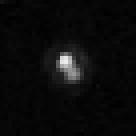
| caption | Hubble Space Telescope image of Ceto and Phorcys, taken in 2006 |
| discoverer | C. A. Trujillo and M. Brown |
| discovery_site | Palomar |
| discovered | 22 March 2003 |
| mpc_name | (65489) Ceto |
| alt_names | |
| named_after | Ceto |
| mp_category | TNO |
| Centaur–extended{{cite web | |
| author | Marc W. Buie |
| author-link | Marc W. Buie |
| date | 2006-05-05 |
| title | Orbit Fit and Astrometric record for 65489 |
| publisher | SwRI (Space Science Department) |
| url | http://www.boulder.swri.edu/~buie/kbo/astrom/65489.html |
| access-date | 2009-01-25}} |
| orbit_ref | {{cite web |
| type | 2006-05-05 last obs |
| title | JPL Small-Body Database Browser: 65489 Ceto (2003 FX128) |
| url | https://ssd.jpl.nasa.gov/sbdb.cgi?sstr=65489 |
| access-date | 25 March 2016}} |
| epoch | 13 January 2016 (JD 2457400.5) |
| aphelion | 187.74 AU |
| perihelion | 17.8498 AU |
| semimajor | 102.79 AU |
| eccentricity | 0.82635 |
| period | 1042.22 yr (380669.7 d) |
| inclination | 22.266° |
| asc_node | 171.85° |
| mean_anomaly | 9.1219° |
| arg_peri | 320.086° |
| satellites | Phorcys |
| ( ~ in diameter) | |
| dimensions |
| | mass | (system){{cite journal | | last | Grundy |first=W.M. | | author2 | Stansberry, J.A. | | author3 | Noll K.S. | | author4 | Stephens, D.C. | | title | The orbit, mass, size, albedo, and density of (65489) Ceto/Phorcys: A tidally-evolved binary Centaur | | journal | Icarus |date=2007 | | arxiv | 0704.1523 | | doi | 10.1016/j.icarus.2007.04.004 | | volume | 191 |issue=1 | | pages | 286–297 | | bibcode | 2007Icar..191..286G | | s2cid | 1532765 | | display-authors | etal}} | | density | (system) | | surface_grav | | | albedo | | | abs_magnitude | , 6.4 | | rotation | 4.43 h | | observation_arc | 9239 days (25.30 yr) | | uncertainty | 2 | | moid | 16.895 AU | | jupiter_moid | 12.7433 AU | | mean_motion | 0.00094570°/day | ::
| minorplanet = yes | background = #C2E0FF | name = 65489 Ceto | pronounced = | adjectives = Cetoan or Cetoian | image = ceto-phorcys hst.jpg | image_scale = | caption = Hubble Space Telescope image of Ceto and Phorcys, taken in 2006 | discovery_ref = | discoverer = C. A. Trujillo and M. Brown | discovery_site = Palomar | discovered = 22 March 2003 | mpc_name = (65489) Ceto | alt_names = | named_after = Ceto | mp_category = TNO Centaur–extended{{cite web |author=Marc W. Buie |author-link=Marc W. Buie |date=2006-05-05 |title=Orbit Fit and Astrometric record for 65489 |publisher=SwRI (Space Science Department) |url=http://www.boulder.swri.edu/~buie/kbo/astrom/65489.html |access-date=2009-01-25}} | orbit_ref = {{cite web |type=2006-05-05 last obs |title=JPL Small-Body Database Browser: 65489 Ceto (2003 FX128) |url=https://ssd.jpl.nasa.gov/sbdb.cgi?sstr=65489 |access-date=25 March 2016}} | epoch = 13 January 2016 (JD 2457400.5) | aphelion = 187.74 AU | perihelion = 17.8498 AU | semimajor = 102.79 AU | eccentricity = 0.82635 | period = 1042.22 yr (380669.7 d) | avg_speed = | inclination = 22.266° | asc_node = 171.85° | mean_anomaly = 9.1219° | arg_peri = 320.086° | satellites = Phorcys ( ~ in diameter) | dimensions =
| mass = (system){{cite journal |last=Grundy |first=W.M. |author2=Stansberry, J.A. |author3=Noll K.S. |author4=Stephens, D.C. |title=The orbit, mass, size, albedo, and density of (65489) Ceto/Phorcys: A tidally-evolved binary Centaur |journal=Icarus |date=2007 |arxiv=0704.1523 |doi=10.1016/j.icarus.2007.04.004 |volume=191 |issue=1 |pages=286–297 |bibcode=2007Icar..191..286G |s2cid=1532765 |display-authors=etal}} | density = (system) | surface_grav = | escape_velocity = | sidereal_day = | axial_tilt = | pole_ecliptic_lat = | pole_ecliptic_lon = | albedo =
| temperatures= | temp_name1 = | mean_temp_1 = | max_temp_1 = | temp_name2 = | max_temp_2 = | spectral_type = | abs_magnitude = , 6.4 | rotation = 4.43 h | observation_arc = 9239 days (25.30 yr) | uncertainty = 2 | moid = 16.895 AU | jupiter_moid = 12.7433 AU | mean_motion = 0.00094570°/day
65489 Ceto, as a binary also (65489) Ceto–Phorcys (provisional designation ****), is a binary trans-Neptunian object (TNO) discovered on March 22, 2003, by Chad A. Trujillo and Michael Brown at Palomar. It is named after the sea goddess Ceto from Greek mythology. It came to perihelion in 1989.
Physical characteristics
::figure[src="https://upload.wikimedia.org/wikipedia/commons/6/69/65489_Ceto.tiff" caption="Polar view of Ceto's orbit"] ::
Ceto is an example of a close binary TNO system in which the components are of similar size. Combined observations with the infrared Spitzer Space Telescope and the Hubble Space Telescope allow the diameter of Ceto itself to be estimated at and the diameter of Phorcys at , assuming equal albedo for both components.
The binary nature of Ceto enables direct calculation of the system mass, allowing estimation of the masses of the components and providing additional constraints on their composition. The estimated density of Ceto is , significantly less than that of the large TNOs (Haumea: , Eris: 2.26, Pluto: 2.03, Charon: 1.65) but significantly more than that of smaller TNOs (e.g. for ). Phorcys has a mass of about . Unless the bodies are porous, the density is consistent with rock–ice composition, with rock content around 50%.
It has been suggested that tidal forces, together with other potential heat sources (e.g. collisions or 26Al decay) might have raised the temperature sufficiently to crystallise amorphous ice and reduce the void space inside the object. The same tidal forces could be responsible for the quasi-circular orbits of the components of Ceto.
Satellite
| minorplanet = yes
|name = Phorcys
| image =
| image_size =
| caption =
|discoverer = Keith S. Noll et al.
|discovered = 2006 April 11
|alt_names = (65489) Ceto I
|pronounced =
|named_after = Phorcys
|adjectives = Phorcynian , Phorcyan
|orbit_ref =
|semimajor =
|eccentricity =
|period =
|inclination =
|satellite_of =
|physical_ref =
|dimensions =
.
primary/secondary ratio
|mass =
|density =
|albedo =
|spectral_type =
|magnitude = ΔM =
|abs_magnitude =
Ceto's satellite was identified as a binary on April 11, 2006, by K. Noll, H. Levison, W. Grundy and D. Stephens using the Hubble Space Telescope; the object was named Phorcys after the Greek sea god, formally (65489) Ceto I. Using an extended definition of a centaur as an object on a non-resonant (unstable) orbit with its perihelion inside the orbit of Neptune, |author=J. L. Elliot |author2=S. D. Kern |author3=K. B. Clancy |author4=A. A. S. Gulbis |author5=R. L. Millis |author6=M. W. Buie |author7=L. H. Wasserman |author8=E. I. Chiang |author9=A. B. Jordan |author10=D. E. Trilling |author11=K. J. Meech |name-list-style=amp |title=The Deep Ecliptic Survey: A Search for Kuiper Belt Objects and Centaurs. II. Dynamical Classification, the Kuiper Belt Plane, and the Core Population. |journal=The Astronomical Journal |volume=129|date=February 2005 |issue=2 |url=http://occult.mit.edu/_assets/documents/publications/Elliot2005AJ129.1117.pdf |page=1117 |bibcode=2005AJ....129.1117E |doi=10.1086/427395|doi-access=free the Ceto system can be considered the second known binary centaur.
Phorcys's diameter has been estimated to be and .
References
References
- Santos-Sanz, P., Lellouch, E., Fornasier, S., Kiss, C., Pal, A., Müller, T. G., Vilenius, E., Stansberry, J., Mommert, M., Delsanti, A., Mueller, M., Peixinho, N., Henry, F., Ortiz, J. L., Thirouin, A., Protopapa, S., Duffard, R., Szalai, N., Lim, T., Ejeta, C., Hartogh, P., Harris, A. W., & Rengel, M. (2012). [https://arxiv.org/abs/1202.1481 “TNOs are Cool”: A Survey of the Transneptunian Region IV - Size/albedo characterization of 15 scattered disk and detached objects observed with ''Herschel'' Space Observatory-PACS]
- Origin of the Homeric Poems, in ''The Quarterly Review'', vol. LXXXVII, Jan. 1831, p. 164
- Henry Tytler (1828) ''Punics of Caius Silius Italicus'', vol. 1, p. 48 [with the stress on the first syllable, consistent with the short 'y' in Greek and Latin]
- The form ''Phorcian'' is also found, but derives from the assimilated Latin ''Phorcus / Phorci'' rather than ''Phorcys / Phorcyos''.[https://www.perseus.tufts.edu/hopper/text?doc=Perseus%3Atext%3A1999.04.0059%3Aentry%3DPhorcus]
- [http://johnstonsarchive.net/astro/astmoons/am-65489.html Johnston's Archive]
::callout[type=info title="Wikipedia Source"] This article was imported from Wikipedia and is available under the Creative Commons Attribution-ShareAlike 4.0 License. Content has been adapted to SurfDoc format. Original contributors can be found on the article history page. ::