2002 Euler
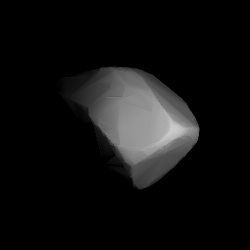
Stony background asteroid from the inner regions of the asteroid belt
title: "2002 Euler" type: doc version: 1 created: 2026-02-28 author: "Wikipedia contributors" status: active scope: public tags: ["background-asteroids", "discoveries-by-tamara-mikhaylovna-smirnova", "named-minor-planets", "leonhard-euler", "astronomical-objects-discovered-in-1973"] description: "Stony background asteroid from the inner regions of the asteroid belt" topic_path: "general/background-asteroids" source: "https://en.wikipedia.org/wiki/2002_Euler" license: "CC BY-SA 4.0" wikipedia_page_id: 0 wikipedia_revision_id: 0
::summary Stony background asteroid from the inner regions of the asteroid belt ::
::data[format=table title="Infobox planet"]
| Field | Value |
|---|---|
| minorplanet | yes |
| name | 2002 Euler |
| background | #D6D6D6 |
| image | 002002-asteroid shape model (2002) Euler.png |
| caption | Shape model of Euler from its lightcurve |
| discovery_ref | |
| discoverer | T. Smirnova |
| discovery_site | Crimean Astrophysical Obs. |
| discovered | 29 August 1973 |
| mpc_name | (2002) Euler |
| pronounced | |
| adjective | Eulerian |
| alt_names | 1938 DW |
| 1942 GJ1953 EB |
| | named_after | Leonhard Euler (Swiss mathematician) | | mp_category | main-belt(inner) | | orbit_ref | | | epoch | 4 September 2017 (JD 2458000.5) | | uncertainty | 0 | | observation_arc | 75.04 yr (27,408 days) | | aphelion | 2.5844 AU | | perihelion | 2.2512 AU | | semimajor | 2.4178 AU | | eccentricity | 0.0689 | | period | 3.76 yr (1,373 days) | | mean_anomaly | 0.3273° | | mean_motion | / day | | inclination | 8.5015° | | asc_node | 178.65° | | arg_peri | 53.294° | | mean_diameter | 17.4 km | | mass | 5.5 kg | | rotation | 5.9929 h | | albedo | | | spectral_type | S | | abs_magnitude | 12.412.7 | ::
| minorplanet = yes | name = 2002 Euler | background = #D6D6D6 | image = 002002-asteroid shape model (2002) Euler.png | image_scale = | caption = Shape model of Euler from its lightcurve | discovery_ref = | discoverer = T. Smirnova | discovery_site = Crimean Astrophysical Obs. | discovered = 29 August 1973 | mpc_name = (2002) Euler | pronounced = | adjective = Eulerian | alt_names = 1938 DW 1942 GJ1953 EB
| named_after = Leonhard Euler (Swiss mathematician) | mp_category = main-belt(inner) | orbit_ref = | epoch = 4 September 2017 (JD 2458000.5) | uncertainty = 0 | observation_arc = 75.04 yr (27,408 days) | aphelion = 2.5844 AU | perihelion = 2.2512 AU | semimajor = 2.4178 AU | eccentricity = 0.0689 | period = 3.76 yr (1,373 days) | mean_anomaly = 0.3273° | mean_motion = / day | inclination = 8.5015° | asc_node = 178.65° | arg_peri = 53.294° | mean_diameter = 17.4 km
| mass = 5.5 kg | rotation = 5.9929 h | albedo =
| spectral_type = S | abs_magnitude = 12.412.7
2002 Euler is a stony background asteroid from the inner regions of the asteroid belt, approximately 17 km in diameter. It was discovered on 29 August 1973, by Russian astronomer Tamara Smirnova at the Crimean Astrophysical Observatory in Nauchnyj, and assigned the prov. designation . It was named after Swiss mathematician Leonhard Euler.
Orbit and characterization
Euler is a non-family asteroid of the main belt's background population when applying the hierarchical clustering method to its proper orbital elements. It orbits the Sun at a distance of 2.3–2.6 AU once every 3 years and 9 months (1,373 days). Its orbit has an eccentricity of 0.07 and an inclination of 9° with respect to the ecliptic.
Naming
This minor planet was named after Swiss mathematician, physicist and astronomer Leonhard Euler (1707–1783). His contributions to astronomy included two theories for the motion of the Moon. Euler spent much of his time in St. Petersburg and was associated with the Russian Academy of Sciences. The official was published by the Minor Planet Center on 15 October 1977 (M.P.C. 4238).
Physical characteristics
Diameter and albedo
According to the surveys carried out by the Infrared Astronomical Satellite IRAS, the Japanese Akari satellite, and NASA's Wide-field Infrared Survey Explorer with its subsequent NEOWISE mission, Euler measures between 14.49 and 19.773 kilometers in diameter and its surface has an albedo between 0.0416 and 0.0839. The Collaborative Asteroid Lightcurve Link adopts Petr Pravec's revised WISE-data, that is, an albedo of 0.0375 and a diameter of 19.78 kilometers with an absolute magnitude of 12.7.
References
References
- {{OED. Euler
- {{OED. Eulerian
::callout[type=info title="Wikipedia Source"] This article was imported from Wikipedia and is available under the Creative Commons Attribution-ShareAlike 4.0 License. Content has been adapted to SurfDoc format. Original contributors can be found on the article history page. ::